Case study:
Reliable pressure monitoring for maximum safety in cable car operation
Cable car systems are highly complex technical installations that are operated under the strictest safety requirements. Reliable pressure monitoring within the hydraulic systems plays a key role in this. The high-precision pressure transmitter NAH 8254 meets these requirements and is therefore successfully used by Doppelmayr/Garaventa. To ensure the safe operation of ropeway systems, electronic safety devices are increasingly being used in drive technology. The condition monitoring of hydraulic braking systems and rope tensioning systems, as well as the emergency drive system, is therefore carried out via electronic monitoring. A key component in this context is reliable and fail-safe pressure monitoring.
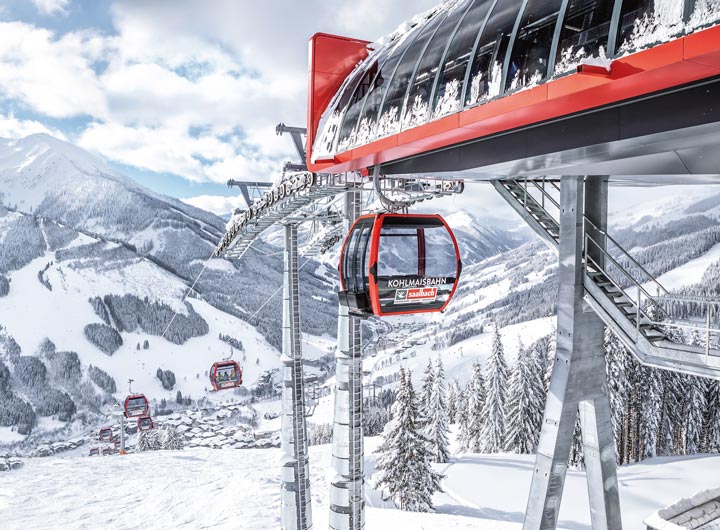
Even before commissioning, fully automated test routines assess the condition of the safety and service brake systems. Cable tension, generated by hydraulic cylinders, enables an initial check to determine, for example, whether trees have fallen into the cable field following a night-time storm. Such unexpected influences on cable tension must not only be detected but also reliably recorded by the sensors. The pressure sensors employed therefore need to offer more than general robustness.
The integrated pressure-measuring cell must also be capable of withstanding sudden pressure surges. To achieve this, a pressure peak damper was combined with a reinforced measuring cell offering five times the overpressure resistance. As a result, the NAH 8254, with a measuring range of 160 bar, can safely withstand pressure peaks of up to 800 bar without sustaining damage. This exceptional robustness, together with outstanding precision and high long-term stability, makes the NAH 8254 pressure transmitter the ideal choice.
At Doppelmayr/Garaventa, all safety systems are monitored redundantly. For example, if an error message appears in the system control or if two measurement values deviate from one another, the cable car is shut down immediately. For safe long-term operation, maximum measurement accuracy of the pressure transmitters is essential, but so too is the long-term stability of the measuring cell. The pressure signals generated by the NAH 8254 pressure transmitter are received and processed by the system control. This information is analysed and integrated into multiple safety monitoring processes. In addition, the signals are fed into the control systems—for instance, when strong winds cause changes in force within the cable tensioning device. The monitoring system continuously evaluates the situation and automatically resumes cable car operation once the specified nominal values are restored. The current system status is also transmitted automatically to the control centre, enabling the cable car operator to use this information for further operational and diagnostic applications.
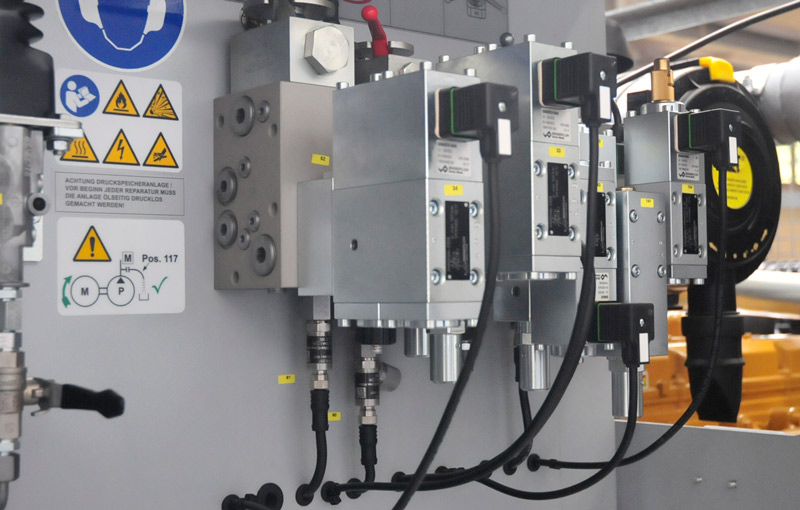
During normal cable car operation, the emergency drive system remains deactivated. In the event of an emergency stop, however, it must switch immediately from standby to operational mode. This may require the system, for example, to be raised from ambient temperatures as low as –40°C to an operating temperature of up to 80°C in the shortest possible time. Such rapid temperature changes present a dual challenge for pressure sensors. On the one hand, a temperature jump of up to 120°C places extreme stress on both the electronics and the mechanical design. On the other hand, it must be ensured that, despite these substantial temperature differentials, the measured values remain reliably within the specified tolerances. To meet these requirements, the pressure transmitters used are temperature-compensated by Trafag during manufacture.
To correct temperature-induced measurement errors, Trafag’s measuring cells are equipped with a dedicated temperature-sensing resistor on the pressure measuring membrane, which also carries the strain-gauge resistance bridges. During production, the pressure transmitters are exposed to defined temperature conditions, and the resulting correction values are stored directly in the Trafag ASIC. This ensures reliable measurement accuracy across the entire temperature range. With pressure transmitters that are not temperature-compensated, measurement errors would become excessive under temperature differentials of up to 120°C, meaning that the safe operation of both the emergency drive system and the cable car could no longer be guaranteed.
The steadily increasing legal requirements for safety-related components in cable car construction have led Trafag and Doppelmayr/Garaventa to intensify their collaboration over the past decade. The shared objective: to develop a pressure transmitter that meets the rigorous demands of daily operation throughout the entire life cycle of cable car installations.
The NAH 8254 is the outcome of this close development partnership. Short decision-making paths, direct communication and a dedicated development team enabled targeted, requirements-driven product optimisation. Today, the NAH 8254 is regarded as one of the most pressure-stable and durable sensors in its class—a decisive factor in ensuring the operational safety of cable car systems worldwide.
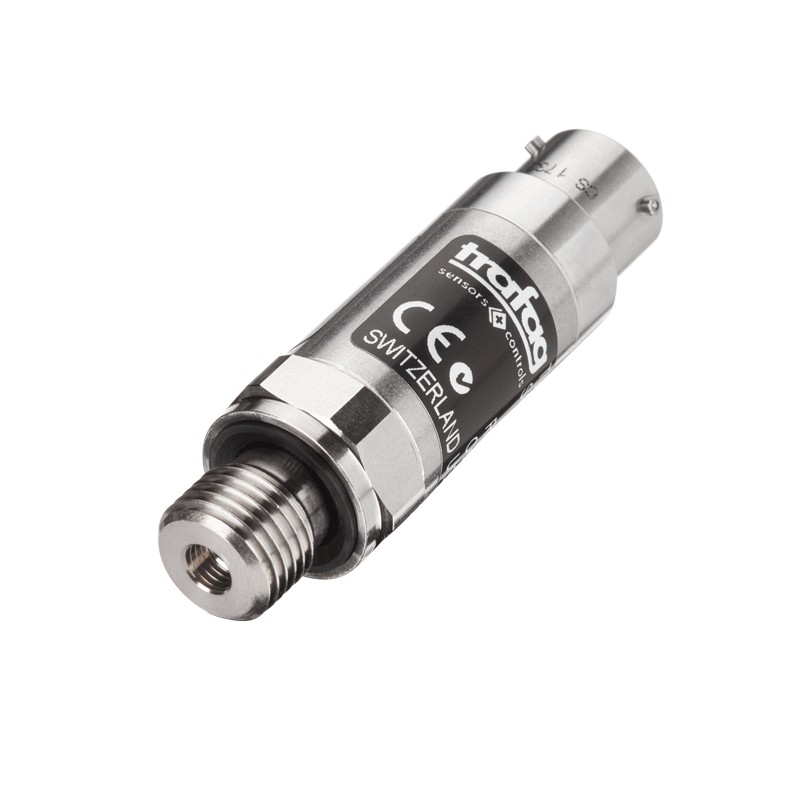
Information regarding the NAH 8254 pressure transmitter
| Measuring range | 0 … 0.2 bis 0 … 1000 bar |
| Overpressure resistance | triple rated pressure (measurement range span), optional: fivefold rated pressure |
| Temperature compensation | Factory-set over the full operating range |
| Applications | Hydraulic braking systems, cable tension, emergency drive systems |
About Doppelmayr/Garaventa
Doppelmayr/Garaventa is recognised worldwide for innovation, quality and safety in cable car construction. With projects in more than 100 countries and a portfolio spanning both urban mobility and tourist applications, the company sets global standards. The Doppelmayr Group employs over 3,000 people across 50 countries worldwide. Together, they plan, develop, design, manufacture, construct and support pioneering projects. These range from high-performance cable car systems for passenger and material transport to efficient intralogistics solutions and creative experience concepts. The partnership with Trafag is a prime example of how technological excellence is achieved through close collaboration and continuous development—delivering tangible benefits for operators and passengers alike, and enhancing safety in both alpine and urban environments.
Technical expert
Sebastian Sattler
Product Manager in Pressure Sensing Technology
Dipl. Ing. FH (Industrial Engineering)